Featured
Table of Contents
, leading to higher customer acquisition costs, lower life time value, and missed growth opportunities. include over-reliance on platform information, incomplete attribution (first/last-touch focus), and one-size-fits-all project techniques. Execute multi-touch attribution (MTA), media mix modeling (MMM+), imaginative analytics, and utilize first-party information for precise insights. By reallocating budgets and optimizing imaginative based upon data-driven insights, companies can make every ad dollar work harder.
A considerable portion of advertisement budgets are consistently lost due to ineffective techniques, restricted data insights, and the ever-changing digital environment and algorithm. If your organization is feeling the pinch or having a hard time to measure project success properly, it may be time to rethink your approach. With smarter tools and techniques, you can unlock the true potential of your ad spending plan and maximize your return on investment (ROI).
The stakes are even greater in today's privacy-first digital world, where the approaching death of third-party cookies may leave lots of services rushing for reputable attribution. A single customer may engage with your brand across five or more touchpoints before buying, from an Instagram advertisement to an e-mail campaign to a Google search.
But with the right tools and techniques, you can turn your advertisement invest into a powerful chauffeur of growth and correctly account for every dollar. Before diving into solutions, it's necessary to comprehend the most typical mistakes businesses make with their marketing spending plans. Platforms like to take complete credit for conversions that might have been influenced by other channels.
Generating Local Traffic Via Advanced Ads
Focusing on just one touchpoint offers you an incomplete photo of the consumer journey. Treating all projects, audiences, or creatives the exact same is a dish for wasted spend.
Attribution Strategies for the Fragmented JourneyUnlike conventional attribution designs that rely on cookies, modern MTA solutions (like Northbeam's) utilize first-party, cookie-proof attribution for higher precision.
Northbeam's MMM+ goes an action even more by including advanced maker learning to forecast earnings and enhance spend in real-time. Picture reallocating 10% of your social media budget plan to search ads based upon MMM+ insights and seeing a 20% lift in conversions. This level of accuracy ensures that every dollar works harder for your organization.
Attribution Strategies for the Fragmented JourneyImaginative analytics tools help recognize which ads resonate with your audience and which fail, enabling you to make data-driven decisions. If your analytics show that video ads exceed static images by 40%, you can move resources to produce more high-performing video content, improving your ROI. In a world where privacy policies and platform predispositions limit the worth of third-party data, first-party information is your secret weapon.
Expert Programmatic Tactics to Boost Results
Advertisement spend optimization isn't always about cutting expenses it has to do with opening growth. There are many locations of prospective ineffectiveness that might be obstructing of your ROI potential. By buying innovative tools like multi-touch attribution, media mix modeling, and innovative analytics, you can optimize the impact of every dollar and drive significant results for your business.
When thinking about OTT choices, you need to consider the possibility of segmentation and targeting. You can also evaluate engagement metrics like interaction and conclusion rates to determine if your advertisements were engaging enough for audiences to really see.
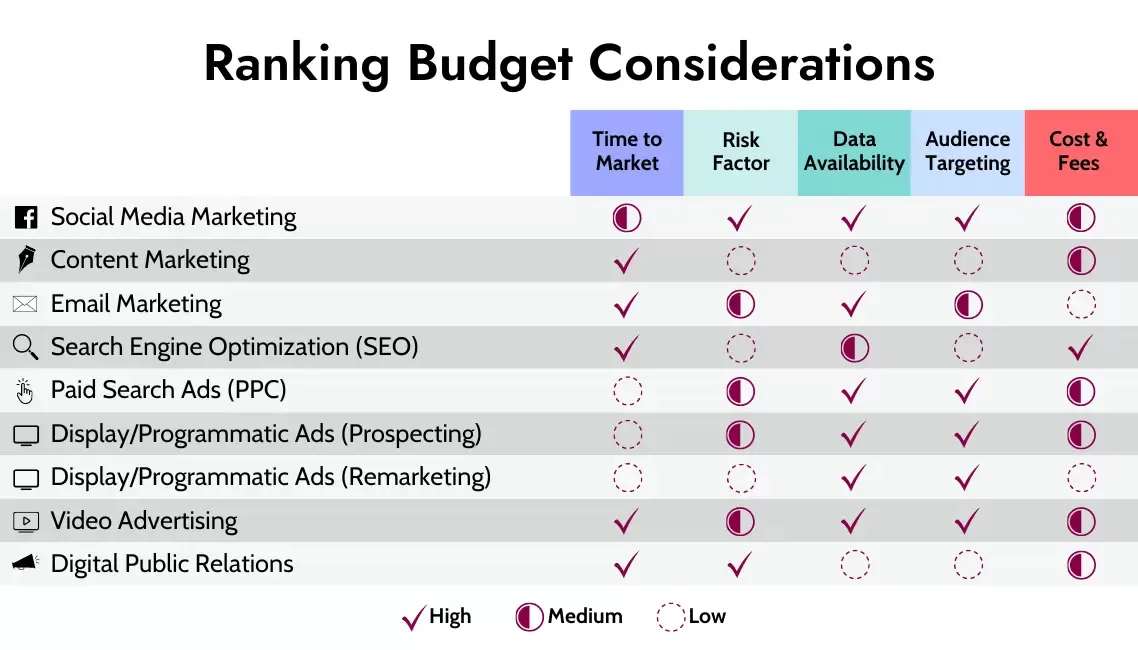
By now, you should have assessed your advertisement invest options and chosen a minimum of one channel to reach your target market. When you have actually figured out how you'll market to them, you need to determine just how much you'll invest on marketing. There are three methods to assist you efficiently assign your media budget plan: Think about factors like your target market, their habits, and the efficiency of the channels you are assessing in engaging them.
Carrying out tests and experiments allow you to evaluate the performance and effectiveness of various media channels, ad formats, targeting options, and campaigns. By implementing experiments, such as A/B testing, you can compare and measure the effect of various variables to recognize the most efficient combinations and enhance your budget plan allowance based on the insights gained.
Leveraging Deep Analytics in Modern SEM
By tracking the efficiency of each channel and campaign, you can identify underperforming areas and reallocate the budget plan to the ones that provide better results. This data-driven method makes sure that your budget plan is designated to the techniques and channels you anticipate to create the greatest returns. Your advertisement costs is a crucial financial element of your organization.
Collaborating your efforts throughout different service teams, channels, and projects will permit your finance and marketing teams to interact to assign your budget plan efficiently. How much you spend on marketing mainly depends upon the types of channels you use, the costs included with developing campaigns, and your earnings. Every company can benefit from economical digital marketing methods like e-mail, social media marketing, and digital advertising.
As digital advertising costs increase yearly, extending marketing budgets to keep or improve ROAS (return on advertisement spend) ends up being significantly difficult. The thing here is that you do not necessarily have to increase your ad budget plan. Rather, you can fix a list of little issues that will result in an outstanding compound impact.
Algorithms in ad platforms like Facebook Advertisements, Google Ads, and LinkedIn Advertisements prosper on premium information. The more detailed data you feed them, the better they can enhance your projects. Nevertheless, online marketers typically undervalue the subtleties of data sharing and conversion tracking, which can substantially impact project efficiency and ROAS.Let's simplify with an example from a recent Improvado webinar.
The pay per click project setup seemed simple: the registration link was included, ads were launched, and traffic began flowing. Here's what went wrong: Due to setup limitations, Facebook could not track when users registered on Livestorm (though Livestorm provides Conversion Pixels, they are only offered in higher-tier packages). Facebook's artificial intelligence algorithm relies on conversion data to find comparable audiences and enhance ad shipment.
Mastering a Advanced Paid Media Blueprint
A less effective social media campaign than it could have been and squandered marketing spend. Platforms need as much relevant data as possible to learn successfully.
Platforms are restricted to their own community. By combining information from numerous platforms, you can get a total image of campaign performance and reveal actionable insights that private platforms might miss out on.

Latest Posts
Innovating SEM With GEO Strategies
Targeting the Ideal Audience Through Precision Media Placement
Effective SEM Methods to Boost Market Visibility